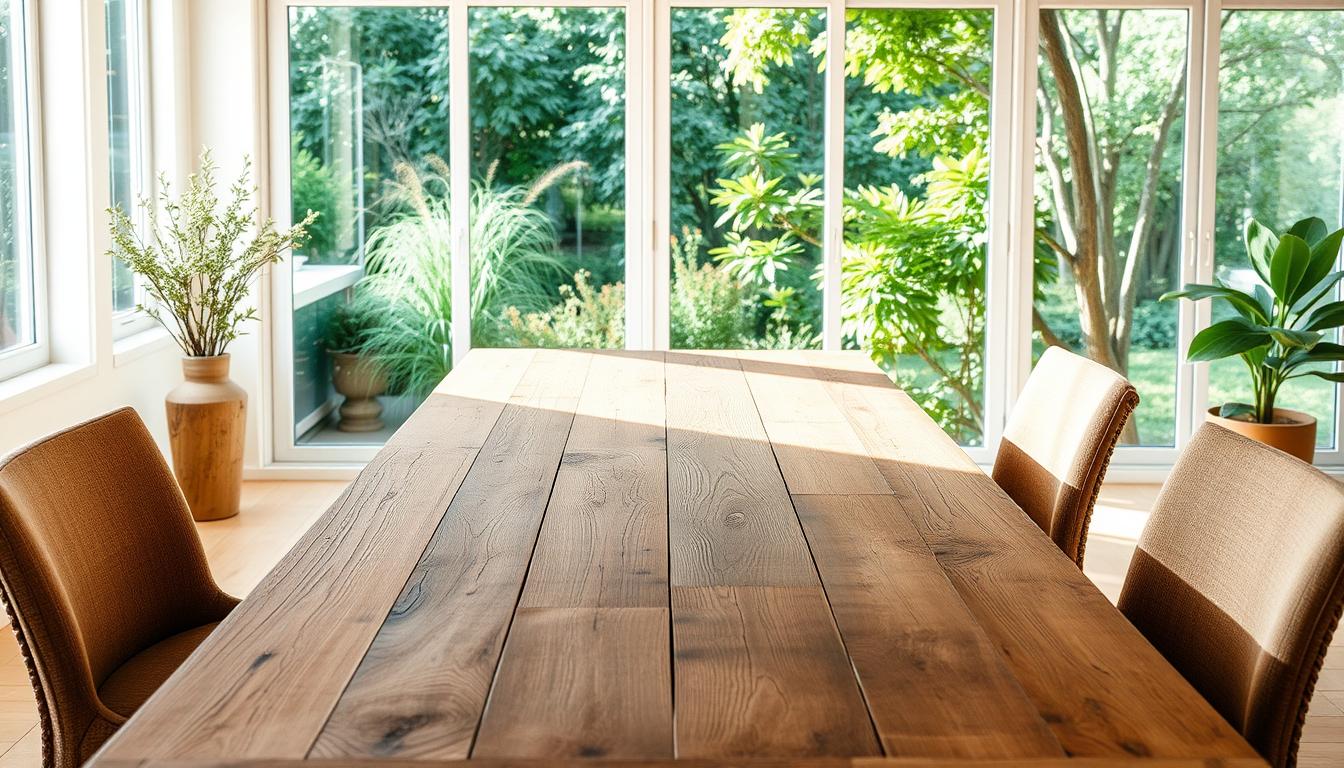
Creating an eco-friendly home interior is not just about using sustainable materials; it’s about making a statement. Choosing a reclaimed wood dining table is a significant step towards achieving this goal. It’s a decision that not only adds character to your home but also supports sustainable living.
By opting for a reclaimed wood dining table, you’re reducing the demand for new lumber and helping to minimize waste. This choice reflects a commitment to eco-friendly home interiors and promotes a more sustainable lifestyle.
Key Takeaways
- Reclaimed wood furniture supports sustainable living.
- Eco-friendly home interiors can be achieved through thoughtful furniture choices.
- A reclaimed wood dining table adds unique character to your home.
- Choosing sustainable furniture reduces environmental impact.
- Eco-friendly choices promote a healthier living environment.
The Growing Trend of Sustainable Home Decor
As concern for the environment grows, so does the popularity of sustainable home decor and eco-conscious interior design. This shift is driven by consumers who are becoming increasingly aware of the environmental impact of their purchasing decisions.
The Rise of Eco-Conscious Interior Design
Eco-conscious interior design is gaining traction as homeowners seek to reduce their carbon footprint. This involves choosing materials and products that are environmentally friendly, such as recycled materials and sustainably sourced wood.
Why Sustainable Furniture Choices Matter
Sustainable furniture choices are crucial in reducing the environmental impact of home decor. The production and disposal of furniture contribute significantly to waste and pollution. By choosing sustainable options, consumers can help minimize this impact.
| Benefits | Eco-Conscious Design | Sustainable Furniture |
|---|---|---|
| Environmental Impact | Reduces carbon footprint | Minimizes waste and pollution |
| Design Versatility | Offers unique, creative options | Available in various styles and materials |
| Long-Term Value | Increases property value | Durable and long-lasting |
What Exactly Is Reclaimed Wood?
Reclaimed wood, with its rich history and sustainable credentials, is revolutionizing the way we think about furniture and home decor. This type of wood is salvaged from old buildings, barns, and other structures, giving it a second life and reducing the need for new lumber.
Reclaimed wood is not just about being eco-friendly; it also brings a unique character to any room. The process of reclaiming wood involves carefully dismantling the original structure, sorting the lumber, and then cleaning and processing it for reuse.
Common Sources of Reclaimed Timber
Reclaimed timber can come from various sources, each with its own history and characteristics. Two of the most common sources are:
Barn Wood and Agricultural Structures
Barns and other agricultural buildings are a rich source of reclaimed wood. The wood from these structures often has a rustic charm and tells stories of the past.
Industrial Buildings and Factories
Industrial buildings and factories also provide a significant amount of reclaimed timber. The wood from these sources can have a more rugged appearance, reflecting their industrial past.
| Source | Characteristics | Typical Use |
|---|---|---|
| Barn Wood | Rustic, weathered, nail holes | Furniture, wall paneling |
| Industrial Wood | Rugged, often with industrial markings | Accent walls, flooring |
The Unique History Behind Each Piece
Each piece of reclaimed wood has a story to tell. Whether it’s from a century-old barn or a former factory, the wood has been part of significant events and has aged over time, developing a patina that new wood cannot replicate.
The history embedded in reclaimed wood adds an emotional and aesthetic value that is highly prized by homeowners and designers alike. When you choose reclaimed wood for your dining table, you’re not just selecting a piece of furniture; you’re bringing a piece of history into your home.
Environmental Benefits of Choosing a Reclaimed Wood Dining Table

The environmental benefits of opting for a reclaimed wood dining table are multifaceted, ranging from reducing deforestation to minimizing waste. By choosing reclaimed wood, consumers can significantly contribute to a more sustainable environment.
Reducing Deforestation and Habitat Loss
One of the primary environmental benefits of reclaimed wood dining tables is the reduction in deforestation and habitat loss. Since reclaimed wood is salvaged from old buildings, barns, and other structures, it eliminates the need for harvesting new timber from forests. This helps preserve natural habitats and biodiversity.
Lowering Your Home’s Carbon Footprint
Reclaimed wood dining tables also play a role in lowering your home’s carbon footprint. The process of harvesting, processing, and transporting new wood requires significant amounts of energy, leading to greenhouse gas emissions. In contrast, reclaimed wood requires minimal processing, thus reducing the overall carbon footprint associated with furniture production.
Minimizing Construction Waste in Landfills
Furthermore, choosing reclaimed wood minimizes construction waste that would otherwise end up in landfills. When old buildings are demolished, a substantial amount of wood is discarded. Reusing this wood for furniture reduces the volume of waste sent to landfills and conserves landfill space.
In conclusion, selecting a reclaimed wood dining table is a practical and effective way to support environmental sustainability. It not only reduces deforestation and lowers carbon emissions but also minimizes waste, making it a responsible choice for eco-conscious homeowners.
The Unique Aesthetic Appeal of Reclaimed Wood
The aesthetic appeal of reclaimed wood lies in its unique blend of history and natural beauty. Reclaimed wood dining tables are not just pieces of furniture; they are carriers of stories and histories, adding a layer of depth and character to any dining space.
Character and Patina That New Wood Can’t Match
One of the most compelling features of reclaimed wood is its developed character and patina. Over time, the wood acquires a richness and warmth that new wood cannot replicate. This patina is a result of years of exposure to natural elements, giving the wood a unique, aged appearance that many homeowners find irresistible.
Natural Imperfections as Design Features
Reclaimed wood often comes with natural imperfections such as knots, nail holes, and weathering, which are not only accepted but celebrated in reclaimed wood furniture. These imperfections are seen as design features that add to the wood’s character.
Knots, Nail Holes, and Weathering
Knots, nail holes, and signs of weathering are common in reclaimed wood. These features tell the story of the wood’s past, giving it a history and a soul. For instance, knots can add visual interest, while nail holes can indicate where old nails once held the wood together, signifying its age and reuse.
Color Variations and Grain Patterns
The color variations and grain patterns in reclaimed wood are another aspect of its aesthetic appeal. The wood can display a range of colors, from deep, rich browns to softer, weathered grays. The grain patterns can vary significantly, adding to the uniqueness of each piece.
| Feature | Description | Aesthetic Impact |
|---|---|---|
| Knots | Natural holes where branches once were | Adds character and visual interest |
| Nail Holes | Signs of previous use and age | Indicates history and reuse |
| Weathering | Effects of natural elements over time | Gives a unique, aged appearance |
| Color Variations | Range of colors due to aging | Enhances uniqueness and beauty |
Durability and Longevity Advantages
Aged wood, with its proven track record, brings a level of longevity to dining tables that is hard to achieve with newly harvested timber. This is because reclaimed wood has already undergone the natural aging process, making it more stable and less prone to warping or cracking.
Why Aged Wood Often Outperforms New Timber
Reclaimed wood has been naturally seasoned over time, often having been previously used in old buildings, barns, or other structures. This aging process enhances its durability by reducing the moisture content, making it less susceptible to shrinkage and more resistant to decay. As a result, reclaimed wood dining tables can withstand the rigors of daily use more effectively than those made from new timber.
Built to Last for Generations
One of the most significant advantages of sustainable furniture made from reclaimed wood is its ability to be passed down through generations. With proper care, a reclaimed wood dining table can remain a beautiful and functional centerpiece in your home for decades. The table below highlights some key benefits of choosing reclaimed wood for your dining table.
| Feature | Reclaimed Wood | New Timber |
|---|---|---|
| Durability | Highly durable due to natural aging | May require time to season properly |
| Environmental Impact | Reduces waste and conserves new resources | Requires new lumber, potentially contributing to deforestation |
| Aesthetic Appeal | Unique character and patina from age | Uniform appearance, lacking the character of aged wood |
Popular Styles of Reclaimed Wood Dining Tables

With its unique history and character, reclaimed wood is used to create dining tables that range from rustic farmhouse to industrial-inspired pieces. The versatility of reclaimed wood allows homeowners to choose a style that fits their decor while also being eco-friendly.
Rustic Farmhouse Designs
Rustic farmhouse designs are characterized by their warm, inviting appearance. These tables often feature distressed finishes and natural imperfections that add to their charm. The rustic look is perfect for creating a cozy atmosphere in dining areas.
Industrial-Inspired Tables
Industrial-inspired reclaimed wood dining tables have a distinct, urban look. They often incorporate metal accents and have a more minimalist approach to design. This style is ideal for those who want to add a touch of modernity to their dining space.
Modern Minimalist Approaches
For those who prefer a cleaner look, modern minimalist reclaimed wood dining tables are a great option. These designs focus on simplicity and functionality, often featuring sleek lines and a lack of ornate details. They are perfect for contemporary homes where less is more.
| Style | Characteristics | Ideal For |
|---|---|---|
| Rustic Farmhouse | Distressed finishes, natural imperfections | Cozy, traditional dining areas |
| Industrial-Inspired | Metal accents, minimalist design | Modern, urban homes |
| Modern Minimalist | Sleek lines, simple design | Contemporary homes |
How a Reclaimed Wood Dining Table Transforms Your Eco-Friendly Space
Reclaimed wood dining tables offer a unique opportunity to create a sustainable focal point in your dining area while promoting eco-friendly living. By choosing reclaimed wood, you’re not only reducing waste but also adding a piece of history to your home.
Creating a Sustainable Focal Point in Your Dining Area
A reclaimed wood dining table becomes the centerpiece of your dining area, drawing attention with its unique character and history. The natural imperfections and patina of reclaimed wood add a warmth that is hard to achieve with new wood, creating a cozy and inviting atmosphere in your eco-friendly space.
Complementing Various Green Interior Design Styles
Reclaimed wood dining tables are versatile and can complement various green interior design styles, from rustic farmhouse to modern minimalist. The key is to balance the table with other eco-friendly elements, such as sustainable flooring, recycled glass lighting, and eco-friendly textiles, to create a cohesive and harmonious space.
By incorporating a reclaimed wood dining table into your home, you’re making a statement about your commitment to sustainability and eco-friendly living. It’s a choice that not only enhances the aesthetic of your dining area but also contributes to a more environmentally conscious lifestyle.
Selecting the Perfect Reclaimed Wood Dining Table for Your Home
When it comes to selecting a reclaimed wood dining table, there are multiple factors to consider for the perfect fit. The right choice can elevate your dining experience and enhance the aesthetic of your home.
Size and Shape Considerations
Choosing the correct size and shape for your reclaimed wood dining table is crucial. You need to consider the dimensions of your dining area and the number of people you plan to seat.
Standard Dimensions and Space Requirements
Standard dining tables usually range from 36 to 42 inches in height and 30 to 36 inches in width. Ensure you measure your space to accommodate the table comfortably.
Custom Options for Unique Spaces
If you have an unusual space, consider custom-made tables that can be tailored to your specific needs. This ensures a perfect fit and optimal use of space.
Wood Types and Their Characteristics
Different types of reclaimed wood offer unique characteristics. For instance, oak is known for its durability, while pine can add a rustic touch.
| Wood Type | Characteristics |
|---|---|
| Oak | Durable, classic look |
| Pine | Rustic appearance, softwood |
| Maple | Light color, resistant to scratches |
Finish Options and Their Environmental Impact
The finish you choose can significantly impact the environmental footprint of your reclaimed wood dining table. Opt for eco-friendly finishes like natural wax or water-based polyurethane.
Care and Maintenance Tips for Reclaimed Wood Dining Tables
To keep your reclaimed wood dining table looking its best, regular care is essential. Proper maintenance not only preserves the table’s beauty but also extends its lifespan.
Daily Cleaning Practices
Daily cleaning is crucial to prevent dirt and dust from accumulating on your reclaimed wood dining table. Use a soft, dry cloth to wipe down the surface. For more thorough cleaning, a damp cloth with a mild soap solution can be used. Avoid harsh chemicals or abrasive cleaners that can damage the wood’s finish or strip its natural oils.
Tip: Always dry the table thoroughly after cleaning to prevent water spots.
Long-Term Preservation Techniques
To preserve the integrity of your reclaimed wood dining table, consider applying a wood conditioner or wax periodically. This helps to maintain the wood’s moisture balance and protect it from drying out. Be sure to choose products that are suitable for reclaimed wood and follow the manufacturer’s instructions.
‘regular maintenance is key to preserving the beauty and longevity of reclaimed wood furniture.’
By following these care and maintenance tips, you can enjoy your reclaimed wood dining table for years to come.
Cost Analysis: Investment Value of Reclaimed Wood Furniture
Reclaimed wood dining tables offer a unique blend of sustainability and investment potential. While the initial cost may be higher than that of new furniture, it’s essential to consider the long-term benefits and value that reclaimed wood brings to your home.
Initial Cost vs. Long-Term Value
The initial cost of a reclaimed wood dining table can be more expensive than its newly manufactured counterpart. However, this type of furniture is built to last, often outperforming new wood in terms of durability and character. The long-term value lies in its ability to withstand the test of time, requiring less frequent replacements and repairs.
Resale Value Considerations
Reclaimed wood furniture tends to appreciate in value over time, making it a valuable asset for your home. The unique history and character that come with reclaimed wood can significantly increase its resale value. Potential buyers are often willing to pay a premium for pieces that are not only eco-friendly but also possess a distinct story and aesthetic appeal.
When conducting a cost analysis, it’s crucial to factor in the potential resale value of your reclaimed wood dining table. This forward-thinking approach can help you understand the true investment value of your purchase.
Where to Source Authentic Reclaimed Wood Dining Tables in the United States
For those seeking a reclaimed wood dining table, the United States offers a diverse range of options from reputable manufacturers and artisans. Sourcing authentic reclaimed wood involves understanding the history and quality of the material.
Reputable Manufacturers and Artisans
Several well-known manufacturers and artisans specialize in crafting high-quality reclaimed wood dining tables. Companies like West Elm and Crate & Barrel offer a range of designs that incorporate reclaimed wood. Additionally, local artisans and small businesses often provide custom-made pieces that are both unique and sustainable.
Questions to Ask Before Purchasing
Before buying a reclaimed wood dining table, it’s essential to ask the right questions. Inquire about the source of the reclaimed wood, the construction process, and any certifications that verify the wood’s authenticity. A reputable seller should be transparent about the materials used and the table’s history.
| Question | Why It Matters |
|---|---|
| What is the source of the reclaimed wood? | Ensures the wood is genuinely reclaimed and not new wood masquerading as reclaimed. |
| How is the wood processed and treated? | Impacts the durability and sustainability of the table. |
| Are there any certifications for the reclaimed wood? | Verifies the authenticity and quality of the reclaimed wood. |
Conclusion: Making a Sustainable Statement with Your Dining Table Choice
Choosing a reclaimed wood dining table is more than just a design decision; it’s a commitment to sustainability. By opting for an eco-friendly dining table, you’re making a sustainable statement that enhances your home’s aesthetic appeal while contributing to a more environmentally conscious future.
Reclaimed wood dining tables offer a unique blend of character, durability, and eco-friendliness that new wood simply can’t match. As we’ve explored, these tables not only reduce waste and lower carbon footprints but also bring a piece of history into your home.
When you select a reclaimed wood dining table, you’re investing in a piece of furniture that will last for generations, becoming a cherished family heirloom. This choice reflects a growing trend towards sustainable home decor, where every element, from the furniture to the finishes, is chosen with the environment in mind.
By embracing reclaimed wood for your dining table, you’re supporting a more sustainable lifestyle and creating a beautiful, eco-friendly space that tells a story.
FAQ
What is reclaimed wood?
Reclaimed wood is wood that has been salvaged from old buildings, barns, and other structures, and reused for new purposes, such as making furniture.
Why is reclaimed wood considered eco-friendly?
Reclaimed wood is considered eco-friendly because it reduces the need for new lumber, thus reducing deforestation and the environmental impact of wood processing.
How do I care for my reclaimed wood dining table?
To care for your reclaimed wood dining table, use daily cleaning practices such as dusting with a soft cloth and avoiding harsh chemicals. For long-term preservation, consider applying a natural wax or oil finish.
Can I customize the size and shape of my reclaimed wood dining table?
Yes, many manufacturers and artisans offer custom options for reclaimed wood dining tables, allowing you to choose the size and shape that best fits your space.
What are the benefits of choosing a reclaimed wood dining table over a new wood table?
Choosing a reclaimed wood dining table offers several benefits, including reducing deforestation, lowering your home’s carbon footprint, and adding a unique aesthetic appeal to your dining area.
How do I know if my reclaimed wood dining table is authentic?
To ensure authenticity, ask the manufacturer or artisan about the source of the reclaimed wood, the process used to reclaim it, and any certifications or documentation they may have.
What are the different styles of reclaimed wood dining tables available?
Reclaimed wood dining tables come in a variety of styles, including rustic farmhouse designs, industrial-inspired tables, and modern minimalist approaches, allowing you to choose the one that best fits your decor.
Is reclaimed wood more expensive than new wood?
While the initial cost of reclaimed wood may be higher, its long-term value and durability can make it a more cost-effective option in the long run.
Can I negotiate the price of a reclaimed wood dining table?
It may be possible to negotiate the price of a reclaimed wood dining table, especially if you’re purchasing directly from the artisan or manufacturer.
How do I maintain the finish on my reclaimed wood dining table?
To maintain the finish on your reclaimed wood dining table, avoid using harsh chemicals or abrasive cleaners, and consider reapplying a natural wax or oil finish periodically.